Understanding shopper mental models to inform site navigation and merchandising taxonomy
Challenge
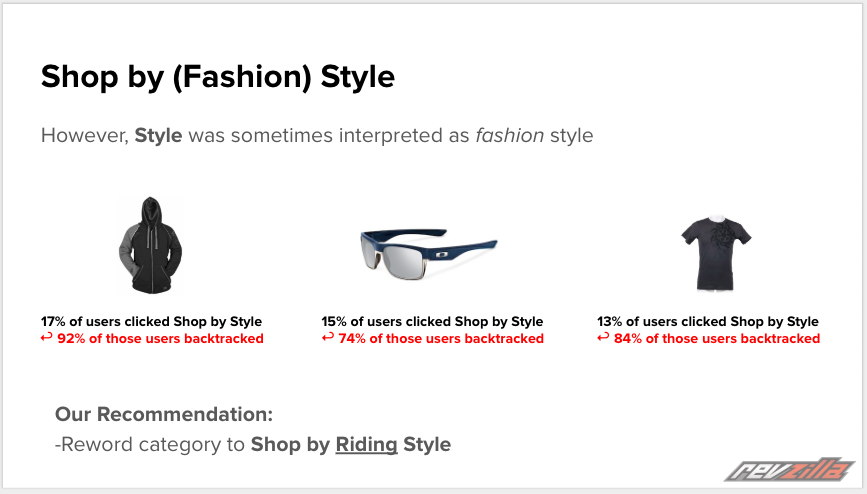
With an average of 6 million visitors a month across several distinct verticals and over a million SKUs in its product catalog, navigation and findability is of utmost importance to RevZilla’s business strategy. From its beginning, the site navigation and product catalog taxonomy forced users to choose a riding segment (such as ‘offroad’ or ‘cruiser’) early in the shop path, prior to selecting a product category segment (such as ‘helmets’). The team wanted to test whether the navigation helped or hindered users’ confidence and ability to explore and shop, and to assess new possibilities.
Approach
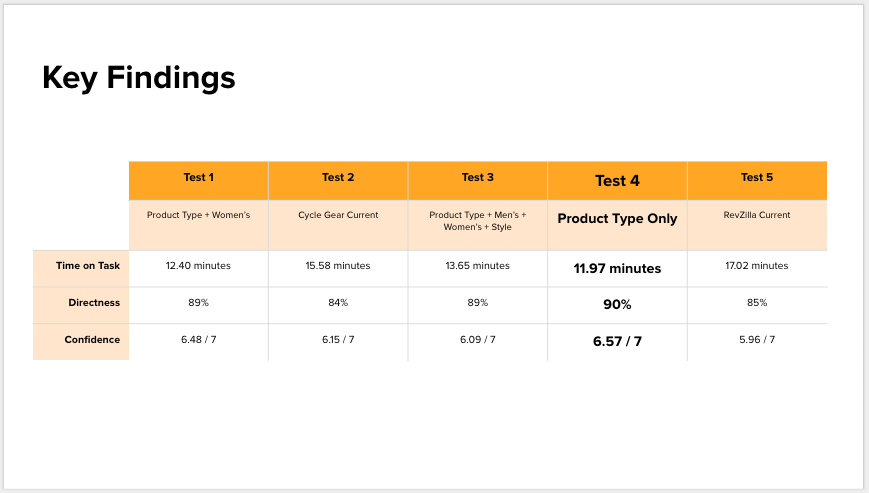
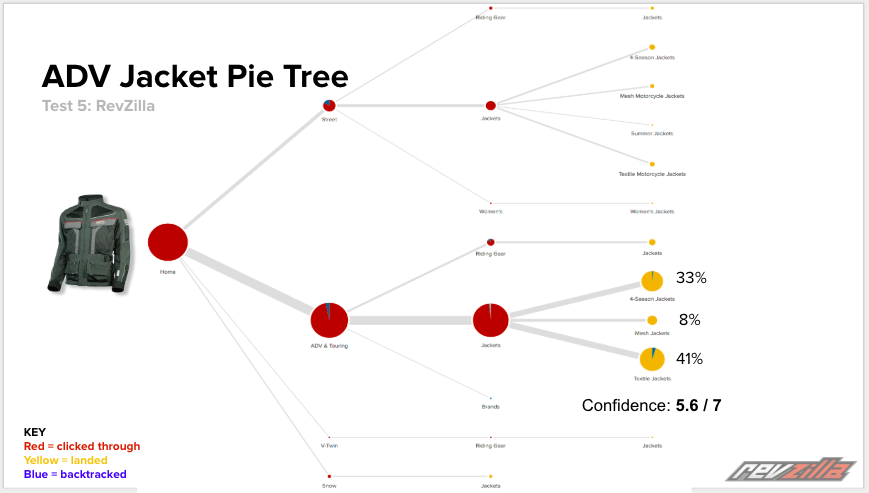
I partnered with an external UX research partner and worked closely with the internal catalog and merchandising teams to research customer mental models and their implications for e-commerce navigation and taxonomy. We ran a series of studies to evaluate the current taxonomic structure, as well as a number of other options, assessing outcome metrics (such as time on task and task success) as well as perceptual metrics (such as task ease, satisfaction, and confidence).
Research Methods
- Open, closed, and hybrid card sorts
- Tree tests
- Expert interviews
- Unmoderated and moderated usability studies
Impact
The research findings directly impacted several key business and design decisions, namely, an overhaul of the main and subsequent navigation tiers (L1-L3s) as well as a re-structuring of the product catalog and the creation of internal guidelines for taxonomy and navigation.
Example Deliverables
 Lucy Gubbins